Less than a year after purchasing our home we found a spot in the floor of the breakfast room that heaved a bit. We figured it was from moisture and the fact that the installer nailed this "floating floor" around the edges which created the bulge. Well, Jon decided to replace the 3 boards that were ruined (thank you previous owners for leaving extra flooring!) and when he opened the floor, this is what he found...
Dealing with Termites
Labels: Pests
Planting a Green Manure/Cover Crop
This year we finally got our ducks in a row and planted a green manure (aka cover crop) in the garden. It's the last "hurrah" in the garden before winter and gives a gardener a feeling of relief that the harvest season is now over and hope that next year's harvest will be even better! Jon says, "It's like giving the garden a blanket for the winter." Without green manure/cover crops, the garden lays open to the elements where weed seeds can land and the wind and rain can wash away the topsoil. It's a simple way a gardener can give back to the soil after the harvest.
Green manure is planted in the fall and remains in the garden until spring when it is mowed and tilled under. There are many benefits to planting green manure including:
- adds nitrogen
- adds organic matter and humus content
- suppresses weeds
- provides some erosion control
- increases microbial activity in the topsoil
- provides competition for weed growth
- breaks up subsoil and clay layers for increased water and air penetration
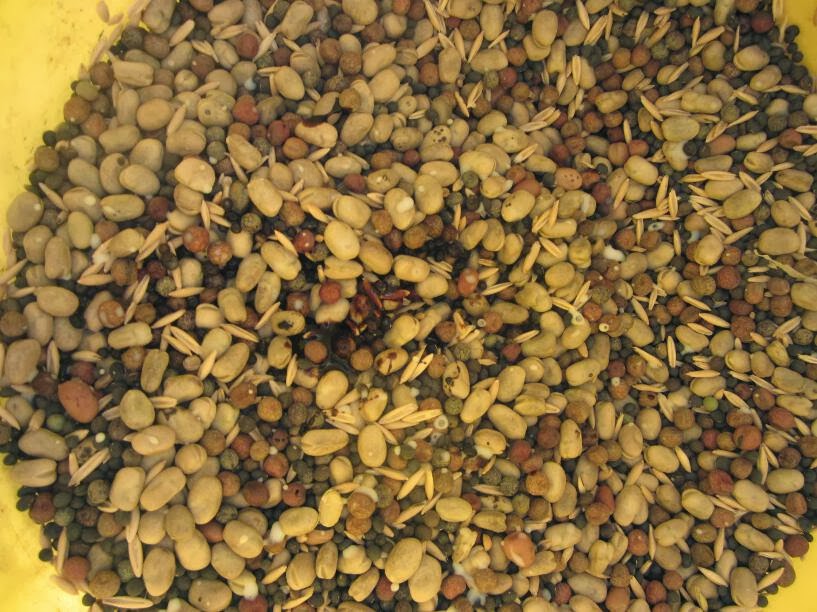
We purchased our cover crop from GrowOrganic.com The mix consists of: bell beans, peas, purple vetch, hairy vetch, common vetch, and cayuse oats. The seeds were purchased "raw" and coated with N-Dure, a bacteria that coats the seeds to stimulate nitrogen production.
Labels: Garden
Butternut Squash and Okra Fettuccini Recipe
Fall is here and the squash harvest is already in our basement. This season we received 30 butternut squash from five plants. Besides serving butternut squash in soup, we enjoy eating our butternuts with pasta. I included the recipe here, but I want to stress that the measurements are estimates because Jon is more of measure-free kind of cook who adds ingredients based off how things "look".
Recipe (serves 4-6, takes about 20-30 min excluding the time to steam the butternut, but you can steam it while you're prepping the other ingredients):
1 small to medium-sized butternut squash (cubed and steamed)
6-10 okra pods sliced in 1/4 to 1/2" pieces
1/2 to 1 cup of diced mild peppers (green, red, or orange bell, use hotter peppers if you like heat)
1-5 cloves of garlic (optional)
1 cup of diced tomatoes
1 1/2 cups of milk
3/4 cup of half and half
3/4 cup of grated Parmesan cheese
1 Tbsp paprika
1 Tbsp thyme
1 tsp garlic salt
1-2 Tbsp Extra Virgin Olive Oil
1 lb of fettuccine (or your favorite shape)
Instructions:
1) Cube up your butternut squash and steam it for 20 minutes or until easily poked with a fork.
2) In skillet, over medium high heat add Olive Oil and saute garlic, okra, and peppers for 7 minutes.
3) Add tomatoes and saute for another minute or two
4) Add butternut, then turn down heat to low-medium and add milk, half and half and parmesan.
5) Cook sauce for a few minutes
6) Finally, once butternut is incorporated into sauce pour over fresh hot noodles
Labels: Recipes
Gathering Pawpaws and Spice Bush Berries
This past weekend my family joined a few friends at the Pawpaw Festival in Athens, OH. A pawpaw is a fruit native to this region of the country and is a fruit that not many people have even heard about. It's a fruit that is easily bruised and spoils quickly so it is not sold in stores. What does a pawpaw taste like? Well, there are many different varieties, but in general I think the creamy, custard interior tastes like a pineapple crossed with a banana. The seeds are quite large and the germination rate is a less than 50% so it takes a lot of patience to grow these from seed. Thankfully a lot can be found growing wild in the woods. We discovered a few pawpaw trees on our property this spring and cleared out that area so they can receive more sun and grow bigger.
Labels: Fruit
Handmade Aspen and Walnut Hutch
Some of you may remember last year's post about us milling a walnut log that we found on our property. With most days this summer being too wet to work in the garden, we had a lot of time in the woodshop to work on the hutch. The light colored wood is aspen that we gathered during our stay in Wyoming back in 2005/2006. The dark wood is black walnut that we gathered here on our property in West Virginia in 2012. I think most will agree that the colors compliment each other very well. We took a lot of pictures along the way to share with you!
Labels: Woodworking
Combining Two Hives & Wax Moths
Doing a quick inspection showed me that one hive was completely queenless with NO brood but sufficient honey stores (ironically this was the hive we stole honey from, but perhaps they robbed from the other hive even with entrance reducers in place). The second hive that was a new package this spring had a queen and a patch of brood about the size of a softball but absolutely NO food sources. What an odd combination: one hive with a lot of food stores but no queen and the other hive with a laying queen but no food. It didn't take long to decide that I should combine the two hives and make one colony. Normally a beekeeper would use the newspaper method poked with holes to combine the two hives, but I thought we were in dire circumstances and just combined the two and filled their feeder. An inspection a week later showed more brood and eggs, and this week normal activity outside the hive. I think I may have intervened at the nick of time before both colonies failed. The chances of this hive surviving the winter? We'll see...
Labels: Bees
Picking Orphan Fruit Trees and Bushes
You know you've seen them alongside the road...just standing there with its branches weighed down from the sweet orbs waiting to be picked. We call these trees "orphans" because each season their fruit drops to the ground and is only enjoyed by the animals and bees. This time of year my family sees orphan fruit trees every where we go. Paul spies them usually before us because he doesn't have to concentrate on the twisty one-lane roads around here. It's easy to say, "Just knock on the homeowner's door and ask if you can pick their tree," but if you're like me, you may be a bit shy and fear the possible "NO!" Come to find out, every time we have asked to pick someone's tree, we have been told, "Oh please pick as many as you can!!" And more than one time we have been told, "I don't like those apples and we just mow over them...they are such a nuisance!" When you begin telling friends and neighbors that you preserve a lot of fruit and enjoy picking it, most likely they will recommend people who have excess to share. It's nice having others brings news of fruit to be picked without you doing all the leg work! My family has been picking orphan fruit trees and bushes for 6 years and here are some suggested guidelines we would like to share with readers:
1. Is the area contaminated? Don't pick next to a busy highway or a creek that receives storm water runoff.
2. Is the fruit area sprayed with fertilizers, pesticides, and Roundup? A quick glance at the grass and surrounding area will give you a good indication of this.
3. Is the fruit tree sprayed for pests? We have asked this question to homeowners and chances are if they don't eat the fruit, the tree isn't sprayed.
4. Are you sure no one wants the fruit? We do a few drive-byes to see if there is fruit lying on the ground rotting. Chances are if the fruit is constantly being picked up, the homeowner is using them. But you may want to ask anyway in the off-chance the fruit is being removed so bees aren't attracted to the rotting fruit.
5. If possible try not to bring a ladder. With so much hype about lawsuits these days, you don't want to scare a homeowner with the possibility that you may fall off and break something.
6. Offer the homeowner something in return for the fruit. Some people don't have the time and/or motivation to make a pie or applesauce but would love some in return for all the apples you take. Offering a service or other produce item in return is also thoughtful. In most cases I give a jar of applesauce and cider as a way of saying thanks. It also helps secure picking for next year! : )
This past week we picked 3 apple trees and even went back for seconds! The first tree was picked in a neighborhood and we made 6 attempts to contact the homeowner because they were never home when we stopped by. The persistence paid off and we hauled away a lot of apples!
Labels: Fruit