Simply Resourceful

Simple ways to be more conscious about how we use our resources.

Showing posts with label Fruit. Show all posts

Deer Girdled Our Fruit Trees!

After four years of care, our fruit trees finally reached a height where deer damage isn't a concern.  The deer will prune the lower branches for us, but the trees are tall enough to survive.  This fall Jon decided to remove the cages from around the trees because mowing grass around the cages are a hassle, weed-whacking inside the cages several times each summer is a hassle, and all that fencing is an eye-sore.  The trees looked absolutely beautiful standing proud in our field; until one night, deer decided to rub their antlers on their trunks and rip their bark off!   It only took one night of exposure for twelve out of the thirty-one un-caged trees to be girdled.  This was certainly a devastating blow after four years of care.  Some of the trees are even loose in the ground from the force the deer exerted on their trunks. 

A week after this happened, we ran into a retired DNR Forester who has had great success with hanging an empty pop can from a rope from a low branch to keep deer from rubbing.  If only we knew this before the trees were girdled!  

What can we do to help the trees that have already been girdled?  Some say the trees will either live or die no matter what an orchardist does to help the situation. One common treatment is covering the wound with latex paint to protect the inner cambium layer and seal off the potential for disease. 

If there is a strip of bark 1/4-1/2 inch thick still in-tact the full length of the trunk, the chances of survival are even higher. 

This is one hard lesson learned, that's for sure!


How to Prevent Peach Borers


On a warm January day, Jon, Paul, and I took a walk around the property and discovered a pool of  jelly-like substance around the base of the peach trees.  I did a bit of research and there seems to be a lot of reasons for the sap leakage.  Some say borers are the main culprit whereas others suggest a bacterial or fungal infection.  One peach grower on a forum says this can happen to young trees when sap pressures are high in early spring and there is a weak graft that has not closed completely,  
After clearing away the sap and a little investigating, we did see holes that would indicate borers. These borers feed on the cambium layer of the tree between the bark and sapwood.  They typically attack the tree between 3 inches below ground to 10 inches above ground. 

This is our first time raising peach trees and we garden using only organic methods.  Besides sticking the end of a paperclip into the borer hole to kill the feeding larvae, organic growers suggest using Tanglefoot, a sticky paste made from natural gum resins, vegetable oil, and wax.  You first wrap the first 12 inches of the tree trunk and a few inches below the soil with strips of stretchy material (e.g. t-shirt) and then apply Tanglefoot directly to the t-shirt.  Tanglefoot traps insects because it is so sticky, thereby preventing the moths from laying eggs on the trunks of the tree.  This is more of a preventative approach and a fine example of why you need to do your research and be proactive rather than reactive.  After three years of watering, weeding, and pruning, the trees may be too weak to survive.  Now that the borers have established themselves, it will be nearly impossible to keep them under control because the borers laid their eggs under the bark last summer/fall.


Strawberry Harvest

 Strawberries are the first fruit of the summer and this year we had our hands full!  So full that after weighing 50 pounds of berries, I lost track.  We had a late spring freeze which bit a lot of the strawberry flowers, but apparently the plants recovered because from the picture above, you can see flowers everywhere! 

It seems like we can never have enough berries around our homestead and friends never tire from them either.  Aside from fresh eating, this year we added them to oatmeal, made coffee cake, smoothies, bread, pies, ice cream, and a lot of jam. 

This strawberry rhubarb pie made in a cast iron skillet was the best pie I had every tasted.  It almost had the flavor of a raspberry pie.  Thanks to my generous friend who has the most prolific rhubarb I have ever seen, traded me some rhubarb for some strawberries. 

My family loves homemade ice cream and naturally flavored with strawberries is a treat!

All together we made 26 pints of jam; some contained rhubarb and some were plain strawberry.  I have to hold back on the jam making every year because it's easy to get carried away filling dozens of jars and blackberry season is slowly approaching!  Jam is always a great gift idea too!


Picky Eater? Let them eat dirt.

Do you have a picky eater in your house? Well, we'd thought we'd share our story on how we raised Paul, and how this kid will eat anything.  The key was we didn't give him choices when he was a baby. He ate what was on the table or he went hungry. We didn't dress up his food with salt or sugar either. In fact, to this day the kid goes through a 25 lb. bag of Bob's Red Mill Oatmeal about every 5 months! It's a fixture at the breakfast table. He eats a heaping cup of dry oatmeal with boiling water poured over the top without any sugar added. After about a year of this, we started adding raisins. In fact, if you put brown sugar on it, he says its too sweet - that goes for a lot of things like pop/soda, chocolate, ice cream...etc.


Paul just ate a handful of dirt and he didn't like it. We did help clean him up...


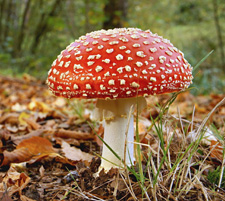
Paul has always been given the option to forage in the garden, and let me tell you...he takes advantage of this freedom. Throughout all hours of the day he will eat raw fruits and vegetables. At first, when he was little, we felt the need to restrict him because he was becoming a pest: eating small bites here and there (when produce was under ripe), breaking vines, trampling seedlings, etc.but Paul was in love with the garden and we were in love with him so it all worked out. Tomatoes, snap peas, broccoli florets, any type of berry, okra, the list goes on and on, he loved foraging. He even knows what not to eat. I think when he was three we showed him a picture of a fly agaric mushroom and said it's a "bad" mushroom. A few weeks later in the dentist office, Paul saw a picture of this mushroom on the wall and exclaimed excitedly "Daddy, that can kill you" (while pointing to the mushroom). So, he knows to ask us before eating a mushroom. We only eat wild oyster and chanterelle mushrooms, and we grow shiitake; anything else he has to ask us about.
Fly agaric mushroom

So a pleasant side effect to all of this is Paul has eaten a lot of dirt, and the kid was perpetually sick the entire first year of his life. Since then, he has maybe had one minor cold. We're sure his little body built up a ton of antibodies and strengthened his immune system so much that he could live in a germ palace and do just fine. Just don't let your kids eat dirt that has been treated with fertilizers/pesticides etc. Our garden is 100% organic/pesticide free so we didn't have that fear.

Eating dirty strawberries...

Eating dirt in the blueberry patch...


Taking care of the strawberries


Mmmm blueberries with dirt...


Foraging for beans
Not going to eat the chicken...

Big Carrot!
Eating peaches
Hunting for Mushrooms
Fresh Corn

Eyeing the trunk full of raw apples (they're not pretty, they may have a worm, but to Paul they're heaven).

A fully loaded apple tree (this tree was only two years old and gave 2 dozen apples)
He loves his fruit and veggies.


A Spring Freeze and Our New Honeybees Leave

Last week my blog post was celebrating the arrival of spring and wishes for a good summer harvest.  Well, it seems my excitement was a bit premature after we had a hard freeze (low temperature reached 22 °F) on April 15th. In the last week, one of the package bees left the hive without warning, almost all of the tomatoes and peppers in the greenhouse were killed by the hard freeze, and two fruit trees aren't showing any life at all.  It was a rough winter and the start of spring isn't looking any easier.  This is the reality of things here which reminds me how frustrating homesteading can be.  For us, these few inconveniences set us back only a little bit of money and a few weeks of extra growing, but for those who make their livelihood selling produce, this is a travesty.  Growing food completely reliant on the weather patterns without the modern technologies of hydroponic growing, temperature-controlled greenhouses, and irrigation sensors, is a challenge.  When I hear shoppers complain about the price of food and how cheap food used to be "back in the day," I am reminded how much time and energy it takes to germinate peppers and tomatoes and how one hard freeze can wipe them out.  But onward we persist with growing our own food, starting with replanting all of those containers in the greenhouse.  The peppers and tomatoes will eventually get planted in the garden and we still have many living fruit trees, and two honeybee hives.  Homesteading isn't always rainbows and butterflies, but we still have many things to be thankful for and lessons to learn---starting with taking plants inside no matter how much of an "inconvenience" it seems at the time!

Many strawberry blossoms were effected by the frost.  The blossom on the left can yield fruit, but the one on the right is dead.

A picture of what a hard freeze does to rhubarb.  


2013 Garden and Homestead Review


Fall is here and while there are a few items left in the garden, I decided to tally up our stash for the winter. Keep in mind that what I've listed is what we put up for the winter.  I didn't include all of the
fresh produce we ate throughout the summer (e.g. peas, cauliflower, tomatoes, lettuce, beans, etc.).

If you've been following this blog for awhile, you may remember the post about record keeping and having a preservation log.  This binder is a must-have for me and helped me put together this list in about 5 minutes.  I also posted about the canning shelf last year which makes organizing your canned goods so much easier if you have the space.  Overall Jon and I say we had a very successful year despite the wet conditions that rotted all of our root crops. Thankfully we have carrots left over from the previous year and the third planting may survive into the winter with enough mulch.
If there is one thing I have learned from homesteading it is this: always think ahead and prepare more than you need because you never know what the following year will bring.  You just can't predict the weather, the pests, your health, and everything else. This summer I had an appendectomy and threw out my back and was basically unable to help Jon for 10 weeks this summer.  Thankfully my husband shares the workload, otherwise the garden would have never happened.  With so many unknowns, you can never really have enough excess; and don't forget about all the jars that will be given away to friends and family!  : )
  • 85 bulbs garlic (10 bulbs will be used for seed)
  • 14 meals of frozen corn (7 full quart bags)
  • 10 pie pumpkins for eating (15 for decoration)
  • 30 butternut squash
  • 58 quarts bush beans
  • 31 quarts, 10 pints stewed tomatoes
  • 22 pints tomato soup
  • 25 half-pints tomato paste
  • 35 pints salsa
  • 12 half pints green tomato hot dog relish
  • 3 quarts tomato juice
  • 4 pints, and 7 half-pints strawberry jam
  • 1 gallon strawberry wine (5 bottles)
  • 1 gallon freezer bag srawberries
  • a lot of strawberry soda and mashed strawberries in freezer for ice cream etc.
  • 26 quarts peaches
  • 15 quart bags frozen peppers (sweet green, beaver dam, poblano)
  • 1 gallon peach wine (5 bottles)
  • 1 gallon pumpkin wine
  • 31 quarts applesauce
  • 5 pints apple butter
  • 21 quarts apple cider
  • 1 gallon apple wine
  • 3 gallons hard apple cider
  • 3 gallon jars of dried apple slices
  • 5 gallon bucket of hulled walnuts, butternuts, and hickory nuts
  • 20.25 pounds honey
  • Updated 11-30-13   
    • 14 pints venison
    • 13 pounds ground venison burger
    • 2 frozen venison roasts
    • 1 batch venison jerky
Golden peaches in jars don't last long!


This summer marked our first honey harvest!

The rains really flooded our seasonal creek and the culvert couldn't keep up with the water so it went over the road.  Neighbors who have lived here 35 years have never seen it flood like this before. 
With the flooding, many skunks were out digging at the ground eating the grubs.  They were up by the beehives but left them alone because there were so many grubs in the ground coming to the surface from all the water.  The flood was dubbed, " The Two Skunk Flood" by Jon's coworkers (kind of an inside joke).

We added 3 barred rock chickens to the coop this year which has been exciting!  They are a bit more skittish around us, but they are beautiful and can be hard to find when they're free-ranging in the woods...
The chicken coop now has 6 chickens.  We're still waiting for 2 of the barred rocks to begin laying.  Last year all of the golden comets were laying before the end of August, and here we are in October and the barred rocks haven't really started.  Not sure what that's all about?


Paul really helps us with the chickens.  He lets them out, puts them away, and helps with feedings and filling the outdoor run with leaves.  If anything, he has socialized them and made them gentle to handle.  Above is a picture of Paul holding our favorite chicken (affectionately named Turkey)...she is the head chicken in the roost who seems to always get more than her fair share of the scratch, crawfish, mice, and assorted grubs we give them as treats.

The green manure is filling out very nicely.  This past weekend we planted the final few rows!  Everything has been put to bed for the year and Jon anxiously waits for the seed catalogs to start arriving!


Gathering Pawpaws and Spice Bush Berries


This past weekend my family joined a few friends at the Pawpaw Festival in Athens, OH.  A pawpaw is a fruit native to this region of the country and is a fruit that not many people have even heard about.  It's a fruit that is easily bruised and spoils quickly so it is not sold in stores.  What does a pawpaw taste like?  Well, there are many different varieties, but in general I think the creamy, custard interior tastes like a pineapple crossed with a banana.  The seeds are quite large and the germination rate is a less than 50% so it takes a lot of patience to grow these from seed.  Thankfully a lot can be found growing wild in the woods.  We discovered a few pawpaw trees on our property this spring and cleared out that area so they can receive more sun and grow bigger.

The festival is located on a lake where attendees can take canoes out for a paddle.  While coasting near the shoreline we came across dozens of pawpaw trees bearing fruit so we picked a few to bring home.  Good thing we picked some because the vendors selling pawpaws at the festival ran out of fruit before we bought some.  If you click the picture for enlargement, you can see a pawpaw in Paul's hands that he already bit into.  Some of these pawpaws were used in a cake and cream cheese frosting.

The seeds are quite large!

At the festival there is atlatl throwing.  Paul thoroughly enjoyed this activity and was very good at it.  Basically you throw darts with a wooden spear thrower.  It looks easy, but it takes a bit of coordination, technique, and a lot of aim. 

One spice that is often used with pawpaws is the spice bush berry.  They are very plentiful in our woods. What do they taste like?  Allspice

Only a few berries are needed in a recipe.  They can be chopped or ground up.

The seeds inside can be eaten, but if you can't grind them up, the shells are fine by themselves. 


Picking Orphan Fruit Trees and Bushes


You know you've seen them alongside the road...just standing there with its branches weighed down from the sweet orbs waiting to be picked.  We call these trees "orphans" because each season their fruit drops to the ground and is only enjoyed by the animals and bees.  This time of year my family sees orphan fruit trees every where we go.  Paul spies them usually before us because he doesn't have to concentrate on the twisty one-lane roads around here.  It's easy to say, "Just knock on the homeowner's door and ask if you can pick their tree," but if you're like me, you may be a bit shy and fear the possible "NO!"  Come to find out, every time we have asked to pick someone's tree, we have been told, "Oh please pick as many as you can!!"  And more than one time we have been told, "I don't like those apples and we just mow over them...they are such a nuisance!"  When you begin telling friends and neighbors that you preserve a lot of fruit and enjoy picking it, most likely they will recommend people who have excess to share.  It's nice having others brings news of fruit to be picked without you doing all the leg work!  My family has been picking orphan fruit trees and bushes for 6 years and here are some suggested guidelines we would like to share with readers:

1. Is the area contaminated?  Don't pick next to a busy highway or a creek that receives storm water runoff.

2. Is the fruit area sprayed with fertilizers, pesticides, and Roundup?  A quick glance at the grass and surrounding area will give you a good indication of this.

3. Is the fruit tree sprayed for pests?  We have asked this question to homeowners and chances are if they don't eat the fruit, the tree isn't sprayed.

4.  Are you sure no one wants the fruit?  We do a few drive-byes to see if there is fruit lying on the ground rotting.  Chances are if the fruit is constantly being picked up, the homeowner is using them.  But you may want to ask anyway in the off-chance the fruit is being removed so bees aren't attracted to the rotting fruit.

5.  If possible try not to bring a ladder.  With so much hype about lawsuits these days, you don't want to scare a homeowner with the possibility that you may fall off and break something.

6.  Offer the homeowner something in return for the fruit.  Some people don't have the time and/or motivation to make a pie or applesauce but would love some in return for all the apples you take.  Offering a service or other produce item in return is also thoughtful.  In most cases I give a jar of applesauce and cider as a way of saying thanks.  It also helps secure picking for next year!  : )


This past week we picked 3 apple trees and even went back for seconds! The first tree was picked in a neighborhood and we made 6 attempts to contact the homeowner because they were never home when we stopped by.  The persistence paid off and we hauled away a lot of apples!

These two trees were next to a church playground and behind a tanning salon.  It took 5 phone calls to locate the owner of these trees.  As tempting as it was to just go ahead and pick them without permission because they were off the main road, I didn't want to get caught for trespassing.  Afterall, I want to make friends with these people so we can pick for many more years!

We don't know what variety the apples were but we really enjoyed them and may graft a branch this winter. 

Paul likes to sample the apples!

To fit as much as we can in our small car we lined the trunk with a tarp.  All together we filled 13, 5 gallon buckets for an estimated weight of about 300 pounds!

If you click the picture (for enlarging) you will still see the tree still full of apples.  We went back for a second picking a few days later. 

Paul is taking a peek at the apples in the trunk and finding the best one for sampling on the way home. 

In one day we processed all of the apples: apple butter, apple sauce, apple cider, apple wine, apple pie, apple crisp, and dehydrated apples.  The next batch of apples was made into cider vinegar, hard cider, pies, and more dehydrated apple slices.  We are curious to see how long the apples will keep in our basement so we stored a couple dozen down there.  Currently the basement is 64 degrees without an air conditioner and the main living area is 80 degrees. 

Happy picking!


About this blog

A weekly update on our adventures of trying to be more self-sufficient by using resources wisely. We explore a variety of topics that most broadly fit in the "Homesteading" category, i.e. beekeeping, organic gardening, edible landscaping/fruit forest, food preservation/canning, woodworking, soap-making, and environmental stewardship.

Search My Blog

I've been featured on:


Followers

Facebook

Contact Form

Name

Email *

Message *

Powered by Blogger.