Simply Resourceful

Simple ways to be more conscious about how we use our resources.

Winter Mending

Mending is not my favorite chore, but it turns time in the dead of winter when nothing is stirring outside.  Below are a few projects I finished:

Jon's travel bag zipper separated from the bag so I joined the two pieces with a strip of black fabric.

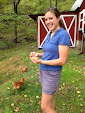
BBQ sauce stained this skort the first time I wore it.  The fabric was basically bleached so... 

a band of ribbon was added to cover the spot, and to make it symmetrical, a ribbon was added to the other side as well.

This Holly Hobby sleeping bag is probably 25 years old and the zipper broke several years ago.  It has been used as a blanket for years but that darn zipper always caught my face when I snuggled with it so I decided to once and for all remove the zipper and hem the edge. 

My nephew outgrew this jacket a few years ago and passed it down to Paul.  The zipper was broke and needed replacing. 

My first Christmas gift from Jon...an oven mitt...10 years ago.  I finally wore a hole in it and couldn't say goodbye to it just yet so it now has a patch. 

I wonder how many patches this pair of work pants will get before it's retired? 

A pair of clogs I purchased for $2.00 at a garage sale 5 years ago.  The soles finally broke out...

so I took them to a shoe repairer and they are good for another several years. 

Fixed the cloth bag for grocery shopping. 

Another pair of pants that needed new elastic.  These were hand-me-downs from a coworker.  They are 2 sizes too big but Paul will wear them eventually.


Honeybees Bringing in Pollen!

It's crazy to see pollen being brought into the hive when it's mid-February!  After reading about a beekeeper (Show Me the Honey blog) in St. Louis finding pollen being brought into his hives, I decided to check mine.  Sure enough, they are bringing in pollen that is bright yellow!  I did a quick search online to find out what flowers are blooming currently and one early spring flower is coltsfoot.  I haven't seen this flower but they are known to grow along roadsides and in wet areas.  We have a creek running through our property along the road so perhaps there is coltsfoot growing there?

The hive has remained closed since the fall when I last checked them so I can only hope the queen is alive and laying eggs.  We have had cold spells interspersed with warm days in the 60's this winter.  The warm days have been a blessing for our hive because they had a small amount of stores for the winter.  Click on the pictures below to enlarge them.  I placed a rock against the entrance reducer because the strong winds knock it off.
Pictures were taken 2-11-13


Maple Syrup Summary 2013


This past weekend was the end of maple syrup season for us.  It was a short 4 weeks but we canned 15 pints and filled 3 flasks with this delicious syrup.  We learned a lot from the experience and plan to tap again next year but we want to get a larger evaporator pan.  The cast iron kettle we used worked really well but we'd like to increase the surface area so we have shorter boiling times.  The picture above shows how the syrup color changes throughout the season.  Starting with the first week of tapping, the syrup is a very light amber color compared to the jar on the right that is very dark from the last boil.  

This is Jon's 3rd design for the boiling operation.


Other links on the blog about tapping maple syrup:  first time tapping   preparing


Feeding Chickens in Cold Weather

Brrr....we just had a cold spell of temperatures in the teens this past week.  While I am all nestled in a blanket sipping hot cocoa, our 3 chickens are huddled on their roost with temps at 11 degrees or scratching the frozen ground in their outdoor run.  Sure, they have feathers, but I can't sit back and watch them peck at the frozen food pellets each morning when I collect their eggs.  To encourage eating and to warm their little stomachs, I warm some water on the stove and then add the water to their pellets to form a mash.  The girls absolutely love this mash!!  I use a flower pot water catcher as the dish for the mash.  As usual I give them a handful of corn grit that they will do just about anything for (it's a great bribe when I need them back in the coop).  The water feeder freezes everyday so I put the frozen water dish in the laundry room sink each day to thaw and replace it with a new one with some of the warm water.  We have golden comets and they are still giving us a reliable supply of eggs through the winter months.  Occasionally we only have 2 eggs, but that's probably only 5% of the time.

Jon took a video last week of me feeding the chickens; nothing exciting, but a few may be interested.  All of the racket in the background is Paul playing pirates.


First Time Tapping For Maple Syrup

We have successfully completed two maple sap runs this year!  We have 24 taps that are collecting sap in metal buckets and we're boiling it over an open fire.  There are only 2 sugar maples and the rest are silver or red maples.  From what I read, silver and red maples produce a lower quantity of sap, less sugar to sap ratio, and make a cloudy syrup.  According to some, it's not worth tapping silver and red maples.  Well, we decided to go ahead and tap the trees anyway and find out for ourselves.


We have completed 2 small boils.  The first one was boiled over a fire in the picture on the left and the flavor was smokey.  To help draw smoke away from the syrup, Jon revised the fire setup and made a chimney as shown in the second picture.  The second setup was an improvement but too much heat went up the chimney so Jon is revising it again before the next boil.  From the picture on the right you can see a pot sitting on the chimney; that is water boiling for lunch and hot chocolate!  A piece of sheet metal covered the entrance when the wind was blowing.


 Transporting the syrup around the property can be a challenge with mountainous terrain and trees not located near trails.  With our small operation of only 24 trees located in 3 main areas, we decided to haul the sap in a hiking backpack!  The pack can hold one of those 4 gallon water coolers real easily.  In one of the pictures you can see Jon and Paul pouring the sap into a funnel that pours into one of the water coolers inside the hiking pack.  It's a pretty easy system enabling us to have our hands free in case we fall or need to push tree branches out of the way.  This is a much better system than carrying buckets!  We don't mind the extra work because this is how we get exercise...no need for a gym membership when we have mountains to climb and sap to haul!  Instead of an ATV, we use a wheel barrow, and instead of a chainsaw, we use a handsaw.  Jon and I try to maintain a simple lifestyle and this is one way we accomplish that.


When filtering the syrup, we used 2 layers of clean scrap fabric for filtering out ashes and other solids; and a wool filter was used right before bottling for collecting sugar sand and other small particles.  I took the picture after the fact, but I wanted to show you how we managed to prop up the wool filter by using a fruit masher/strainer.  We didn't realize how large this filter was when we ordered it but we still use it!

All of the maple syrup supplies were purchased used except for the wool filter.  The total cost of supplies, including shipping was: $286.94

Seed Catalogs and Fruit Tree Addictions


It's that time of year...when Jon gets squirrely because seed catalogs arrive in the mail.  "Can we get these...let's try this variety...look at those plump berries...perhaps we can find room for a few more fruit trees..."  These phrases are like mantras repeated in the house until an order is placed and the pages of the catalogs are sufficiently dog-eared.  We only ordered 2 catalogs this year but received others as well.  Hmmm...someone must be selling our information?  For a few weeks now Jon and Paul have spent hours perusing the catalogs and drooling over the pictures.  There must be a support group for those with a spouse addicted to these catalogs!  Now that an order has finally been placed, I did an official count and we now have 26 fruit trees, 14 blueberry plants, and a bunch of other miscellaneous fruits such as kiwis, blackberries, raspberries, honeyberries, etc.!  We may have 17 acres but we are soon running out of open space for everything; so Jon decided to bring the trees inside...we have tropical trees now...lemons, limes, oranges, olives, and tangerines!  I can only imagine the amount of fruit there will be in 10 years....


In addition to the catalogs, Jon is making a seed inventory.  Surprisingly we only have a few vegetables to purchase this year because we saved so many seeds last year. 


Mushroom Foraging and Plugging

Recently on a nature walk on the property, Jon and Paul discovered some mushrooms.

Jon identified these as oyster mushrooms.  He has eaten several of them without any ill effects!


The deer have discovered this cluster of mushrooms and have eaten them, unless some other wild creature also eats mushrooms?

Are these turkey tail mushrooms?  They are really pretty to look at. 

If you set mushrooms upside down on an old window overnight they will leave behind their spores.
(the white hazy stuff)

Jon was so inspired by all of the wild mushrooms and harvesting from the logs we currently have, that he impulsively bought 500 Shitake plugs from EverythingMushrooms.com  We used oak logs that fell during the Hurricane Sandy Snowstorm.  From the picture, you can see we ran out of wax and didn't cover the log ends.  
Previous posts about growing our own mushrooms: 


About this blog

A weekly update on our adventures of trying to be more self-sufficient by using resources wisely. We explore a variety of topics that most broadly fit in the "Homesteading" category, i.e. beekeeping, organic gardening, edible landscaping/fruit forest, food preservation/canning, woodworking, soap-making, and environmental stewardship.

Search My Blog

I've been featured on:


Followers

Facebook

Contact Form

Name

Email *

Message *

Powered by Blogger.