Simply Resourceful

Simple ways to be more conscious about how we use our resources.

A Knife Made By a Local Blacksmith


We had the privilege of meeting our blacksmith neighbor, Charlie, two years ago at a festival.  Jon and I were mesmerized watching him hammer away at a red-hot piece of metal while talking to others about the art of blacksmithing.  He had an infectious personality with a knack for educating others and we just had to talk to him.  Some time during our conversation with Charlie we learned that we only live about a mile from each other!  Charlie and his wife Evelyn, are one of those neighbors you are happy to wave to when they drive by, and they never miss a honk of the horn when they see us.  They are pretty awesome people to know, and give more than a generous amount of their time volunteering at the Heritage Farm Museum in Huntington, WV.

When I asked Charlie how he learned the trade of blacksmithing, he said, "I just taught myself along the way.  If you want to learn something, you can find the information in a bunch of places.  Don't be afraid to fail."  Charlie is truly an inspiration with a myriad of knowledge.  Him and his wife built their own home here in West Virginia using their own mill and have a lot of general knowledge about the area and homesteading.  Before leaving West Virginia, I wanted to take something unique with me from the area, so I asked Charlie to make us a functional knife, not just something decorative.  The knife handle is made from myrtlewood, a native evergreen from Oregon that a deceased friend (and coworker) gave to us during our five year stay in Portland, OR.  We have carried this block of wood with us for years, reserving it for something special because it is a unique hardwood from a special friend.  The seven inch hand-forged blade is 51-60 steel.  The sheath was hand-stitched by Charlie as well.  All together, the knife is a blend of OR and WV.

The knife and sheath.

A close-up of the knife handle with his trademark showing on the end of the knife blade.  A large C and B for Charlie Bradley.

A stamp on the blade that reads "C. Bradley Culloden, WV."


It's nice that Charlie stamps the knife with the type of steel used: 51-60.

Knife length.

The leftover chunk of myrtlewood the handle was made from.


The blacksmith shop.

I really like the details Charlie put on the front and side door of his shop.  It's like stepping back in time with the old-fashioned look. 


Inside of the blacksmith shop.
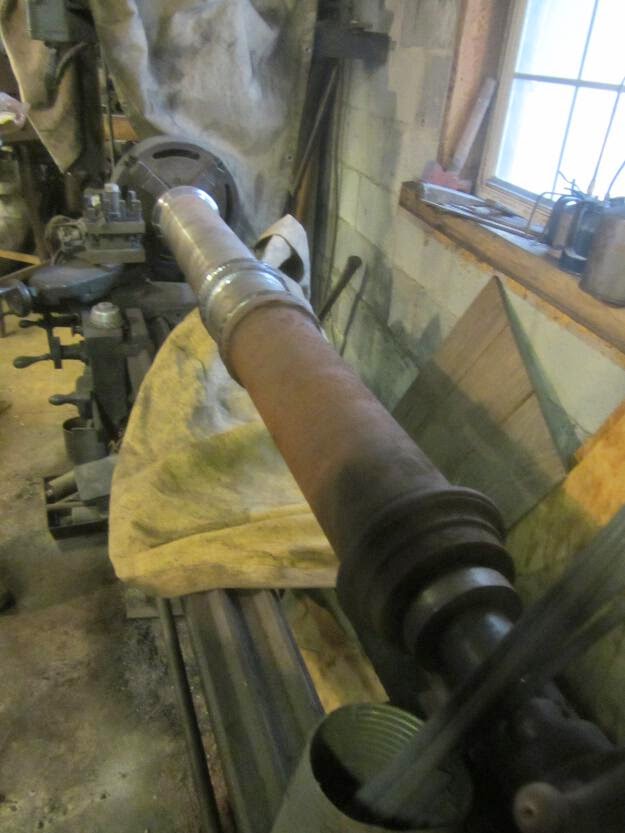
One of many projects he is currently working on, a cannon.

Many tools hanging from the ceiling.


The Decision to Butcher Two Chickens

Picture taken: 4-7-2012

This past week my family butchered two of our golden comets that were almost three years old.  This task has been put off for months because we do love our chickens, and we had no prior butchering experience.  I watched numerous YouTube videos and talked with a friend about the logistics and even lost two nights of sleep thinking about it.  What bothered me most was the ethical decision to end their lives.  These chickens were the start of our homestead two weeks after moving into our home. Not having them here will be the beginning of our final chapter here in West Virginia.  We had the original three golden comets last week and during one of their final free-ranging days, two neighborhood dogs killed one.  I was sad and upset that the chicken probably had a slow death and the meat was wasted.  It was the sight of the dead chicken scattered around the yard that ultimately led to my decision to butcher them myself so their lives would be ended quickly, and we could enjoy the meat.

It was not an easy task, and I admit that I almost cried when carrying the chicken upside down in a feed sack with her head poking out.  Doing the butchering ourselves really raised a lot of questions about our food choices and the disconnect even we feel about our food.  We grow a large portion of what we eat and understand where our food comes from, but actually butchering our chickens for the meat rather than just enjoy them for the eggs, started a new conversation between Jon and I.

I did consider giving the chickens to someone else, but the golden comets have an egg-eating habit and they are major bullies.  The pecking order in our coop has been a problem because one of the golden comets will pin down another chicken while the other two pull the feathers out of her head.  This was a problem last spring and one of the barred rocks was bullied to the point that she was in a failure to thrive state from lack of food and water.  We had quite the challenge keeping the two breeds separate during the cold days when they were not free-ranging every day.  Considering these two challenges, another chicken owner probably wouldn't want to introduce these habits into their flock.

I thought it necessary to include a few pictures of our birds as a reminder to how much joy they provided us on the homestead.

The girls sunning themselves on a warm day.

An afternoon at the spa (aka dust bath).

Land sharks hunting in the weeds.

Paul's pet parrot for his pirate ship.


Winter Bread Baking

It's January and cold outside with temperatures expected to drop into the single digits this week.  To give the house a cozy feel, I bake bread.  It tastes so good with a dab of butter next to a bowl of soup.  And do I even need to describe in detail the smell of baking bread?  I was debating on whether to include step-by-step instructions for bread making, but I realize there are dozens of blogs with tutorials on this process.  Instead I will briefly introduce the two varieties I make.

By far the easiest bread to make is artisan bread taken from Artisan Bread in Five Minutes a Day by: Jeff Hertzberg and Zoe Francois.  The name sounds fancy, but the process is actually very straight forward and can be made in a normal oven.  For this bread, the dough is mixed in a container and stored in the refrigerator until baking day.  When you are ready to bake, you grab a cantaloupe-size ball of dough and throw it on a pizza peel to rest for about 40 minutes before sliding it on to a preheated baking stone in the oven.  A cup of water is added to a cast iron skillet in the oven to create that crispy crust that artisan bread is known for.  If you want to impress your friends with homemade bread, this is it!  There are recipes for different flours and other additives.  My family currently enjoys the Italian Semolina Bread.  

Another type of bread I make on occasion is a traditional white bread where the dough rises first in a bowl and then again in a loaf pan.  Different flours can be used in place of all-purpose flour if you choose.  I use a recipe from the Betty Crocker Cookbook.  What ever type of bread you choose to make, it will smell and taste fantastic because you made it. Enjoy!


Happy Holidays!


The holiday season is upon us and I want to thank everyone for stopping by my blog throughout the year. It's hard to believe that 2015 is almost here, and I have a feeling that there will be a lot of change for my family.  Looking ahead to the New Year, I am collecting future blog posts and want to ask readers for input on specific topics you would like me to blog about.   Just leave a suggestion in the comment section or send me an email! Happy Holidays to you and your family!

Contributing to a Sustainable Local Market

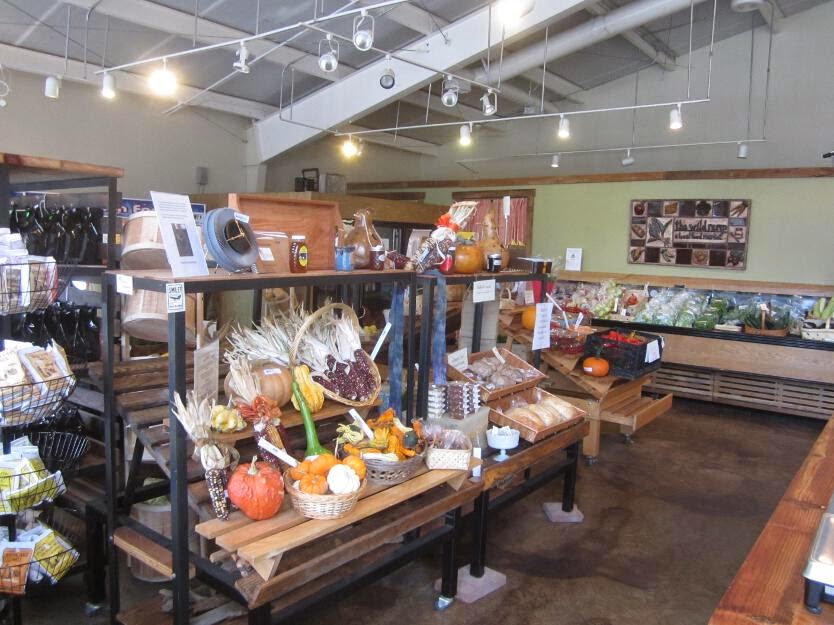
Beginning mid-October this year I started volunteering and selling items at the Wild Ramp, a local food and artisan store selling products grown and made within 250 miles of the store in Huntington, WV.  The Wild Ramp is like an indoor farmer's market where farmers personally drop off their produce and talk with customers; and where handmade artisan products are sold by local community members.  There are only three paid staff members at the Wild Ramp so the store relies heavily on volunteers to keep things going on a weekly basis.  I have been told for several years that Jon and I should sell our handmade toys and wood items that we make.  I always assumed that people wouldn't buy our stuff because of the price we have to charge to make it worth our time.  Well, come to find out, people are willing to pay and it seems that I can't keep up with the demand!  I included a few pictures of items I am currently selling.  Producers pay a $15.00 fee per month to reserve shelf space and receive 90% of the profits.

With the holiday season, I put together a few centerpieces made with holly, pine cones, dried berries, and pine boughs from our woods. 

I have been making holiday wreaths for five years now and they are super easy to make so I made a few to sell.  Like the centerpieces, I gathered supplies in the woods and even tucked a few turkey feathers in the greenery from a friend who raises turkeys.  This was my first year making bows with the help from youtube.

I made a mushroom rattle as a baby gift for a friend four years ago and they were so cute that I made more of them and expanded the rattle design to apple trees and ladybugs.  In less than a month, all of the mushrooms sold!  

On the top shelf in this picture are a bunch of my wooden toys that are really popular at the Wild Ramp.  To see the toys better, click the picture to enlarge.  In one month, I sold all but two of the cars on that shelf and even had a special order for two of the dump trucks.  Like the rattles, I continue to make more and restock the shelf on a weekly basis because they sell out quickly!

Most producers include specific information about their items and where they are located so customers feel more informed about the product.  For instance, meat and dairy products have labels for grass-fed only, grain-finished, free-range, non-GMO feed, etc.  For my toys I tell customers that I use re-purposed wood and seal it with a child-safe linseed and beeswax finish.

These log stools are really cute and modeled after the traditional milking stool.  The logs are gathered from our property.

We are also selling bag drying racks with the message, "Don't throw away your Ziploc bags!  Wash and hang them to dry on this rack."

Overall, volunteering and selling my wares at the Wild Ramp has been a productive use of my time while Paul is in full-day Kindergarten.  Whether it's seeing a customer get excited about my wooden toys or talking about different chicken breeds to the farmer who sells eggs, I have so much fun just being at the Wild Ramp.  It's a place where you feel part of the community and are surrounded by like-minded people. 


Homemade Wrapping Paper

Three years ago I wrote about Resourceful Gift Wrapping.  Since then we have taken it a step further by making our own wrapping paper.  We use plain paper that has been included in packages we receive in the mail and Paul's fingerpaint. If your children are grown and you don't know what to do with all that random, half-dried paint, this is a good project for it!

Having Paul paint on paper is a great way to pass the time during the long summer days.  We held the paper down using blocks of wood.  This picture was taken August 2013.

Paul had fun drawing pictures, writing letters, and just scribbling.  In the end, it doesn't really matter what the designs look like because the paper will be cut to fit the packages.  The key is to have a lot of colors and irregular lines. 

If you don't have a child to help with painting, you can do it too.  And don't say you aren't creative and artistic...dots, lines, and swirls look pretty awesome too!


Why Buying Food in Bulk Makes Sense

When people talk about "buying in bulk," there's the assumption that you have a grocery store with a multitude of bins that allow you to pay for items by the pound.  While living in Portland, OR, there was an abundance of these options in grocery stores, but where I live now, I have only found one store with 8 bulk bins that contain nuts, popcorn, rice, oatmeal, and granola.  I was a bit discouraged by the lack of options, so I did my research, made several phone calls, requested grocery stores to purchase items in larger containers, and compared the cost of purchasing small bags versus the added cost of shipping large bags.  No surprise, but even with the added cost of shipping, I could still save money by mailing large bags of oatmeal, flour, and peanut butter, to my doorstep.  I do want to clarify, that I purchase specific brands so I wasn't comparing store-brand labels.  If you watch closely, many companies offer free-shipping, especially during the holidays which give you an even larger savings.  Our bulk items are stored inside Rubbermaid totes in the cool basement.  

King Arthur Flour is our favorite brand of flour and we order it in 25 pound bags.  100 pounds will last us about 8 months.

We purchase our grains from Bob's Red Mill in the 25 pound bags.  Our family consumes about 50 pounds of oatmeal each year!

Okay, some of you readers may be laughing at this point with our oatmeal and flour consumption, but I challenge each of you to actually keep a log of what you consume, because I think you will be shocked to see how many bags or containers of a specific product you purchase every year.  Take for instance, peanut butter.  Paul enjoys a peanut butter and jam sandwich for school lunch.  I probably make peanut butter cookies and scotcharoos three or four times a year, and between Jon an me, we probably only have toast twice each month.  Given that information, I think you would be astounded to learn that we go through two, 9 pound tubs of peanut butter every year!!  Our brand of choice: Once Again Nut Butter.  The added benefit of this peanut butter is that it comes in a reusable bucket with a metal handle (makes a great compost bucket!)  Purchasing in bulk helps reduce a lot of the packaging waste...just think how many small containers we would be going through if we didn't purchase the bucket?

What else do we consume a lot of?  Cheese!  I was born in Wisconsin and have a serious love affair with cheese, eating it at least 5 out of 7 days a week.  Homemade pizza is a staple food for us.  We ask the deli department to cut a half wheel of Monterey Jack every 2 months. 


About this blog

A weekly update on our adventures of trying to be more self-sufficient by using resources wisely. We explore a variety of topics that most broadly fit in the "Homesteading" category, i.e. beekeeping, organic gardening, edible landscaping/fruit forest, food preservation/canning, woodworking, soap-making, and environmental stewardship.

Search My Blog

I've been featured on:


Followers

Facebook

Contact Form

Name

Email *

Message *

Powered by Blogger.